Commercial Roofing in Phoenix, AZ
Repairs, coatings, TPO, spray foam, modified bitumen and EPDM for warehouses, offices, retail and multifamily buildings across Phoenix. Our office is in Ahwatukee, inside the city.
Licensed ROC #358508. Open 24 hours, 7 days. Call (602) 849-7990.
Phoenix is Arizona's largest city, and most of its commercial roofs are flat. Warehouses, strip centers, offices, medical buildings and apartment complexes almost all sit under low-slope roofs behind parapet walls, where the owner seldom sees them until a tenant reports a stain on a ceiling tile.
Our office is at 5110 E Warner Rd #210 in Ahwatukee, which is part of the City of Phoenix, and we answer the phone 24 hours a day, 7 days a week. This page covers the commercial roofs we see across Phoenix, how we decide between a repair, a coating and a new roof, and what the city requires before work starts.
The commercial roofs we see across Phoenix
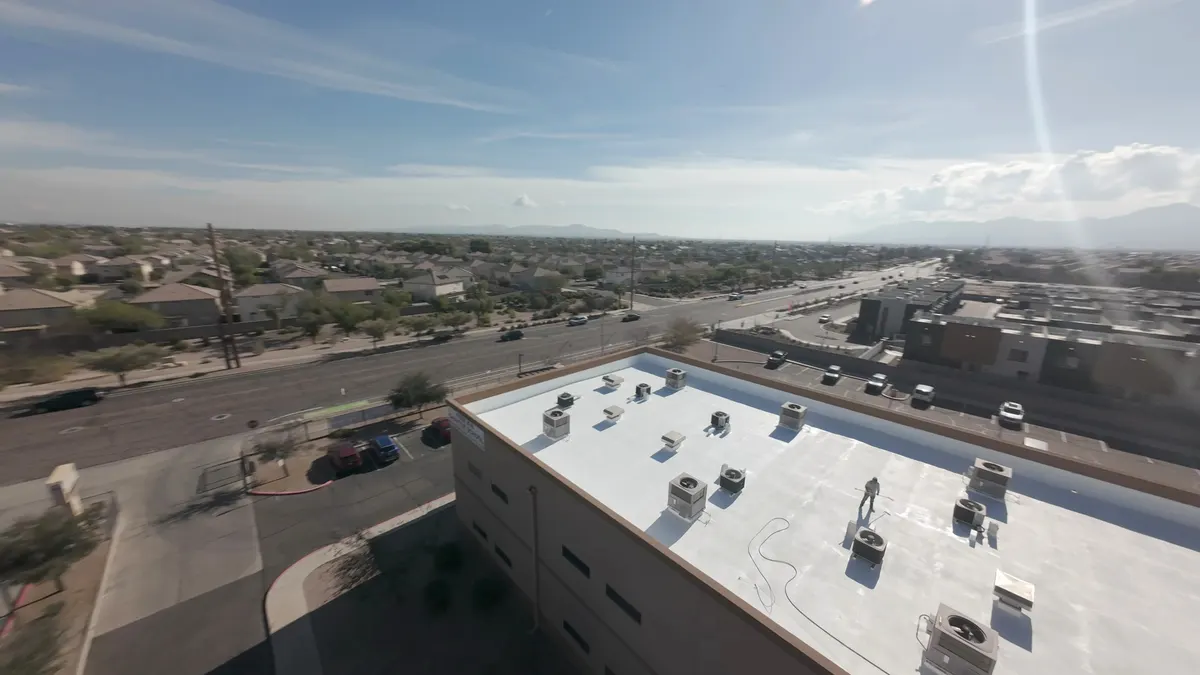
Phoenix's commercial buildings span seven decades, and the roof usually tells you which decade. Older strip centers and offices along the city's main arterials often have a built-up or gravel roof that was later covered with foam or a coating, sometimes more than once. Warehouses and light industrial buildings in the industrial areas around Sky Harbor Airport and along I-10 and I-17 tend to have large, open roofs with long drainage runs to a few scuppers or drains. Newer buildings usually have younger TPO or foam roofs that mostly need maintenance and repairs.
Multifamily buildings are their own category. Many Phoenix apartment complexes mix flat roofs with pitched tile or shingle sections, and each building has a row of HVAC units and roof penetrations to keep sealed. We handle both the flat and pitched parts, so one estimator can walk the whole property.
What Phoenix heat and the monsoon do to a flat roof
Summer highs in Phoenix regularly pass 110°F, and a dark roof surface gets far hotter than the air. That heat dries out asphalt-based roofs, wears down coatings and works every seam and flashing as the roof expands in the afternoon and shrinks at night. A foam roof is protected only as long as its coating is; once the coating is thin, the sun starts breaking down the foam.
The monsoon runs June 15 to September 30. Dust storms blow dirt and debris onto flat roofs and into drains, then heavy rain arrives before anyone has cleared them. One blocked scupper can back water up over flashing that was never meant to sit underwater. Roofing standards treat water still sitting 48 hours after rain as ponding, and ponding shortens the life of any roof system.
Repair, recoat or replace a Phoenix commercial roof
Because so many Phoenix roofs have been recoated or recovered over the years, the first job is finding out what is actually up there. We walk the whole roof, probe soft spots, and take small core cuts where needed to count layers and check whether the foam or insulation is wet. Core cuts are patched before we leave, and you get photos of what we found.
- Repair: the rest of the roof is sound, and the problem is a seam, a drain, a curb or a few damaged areas.
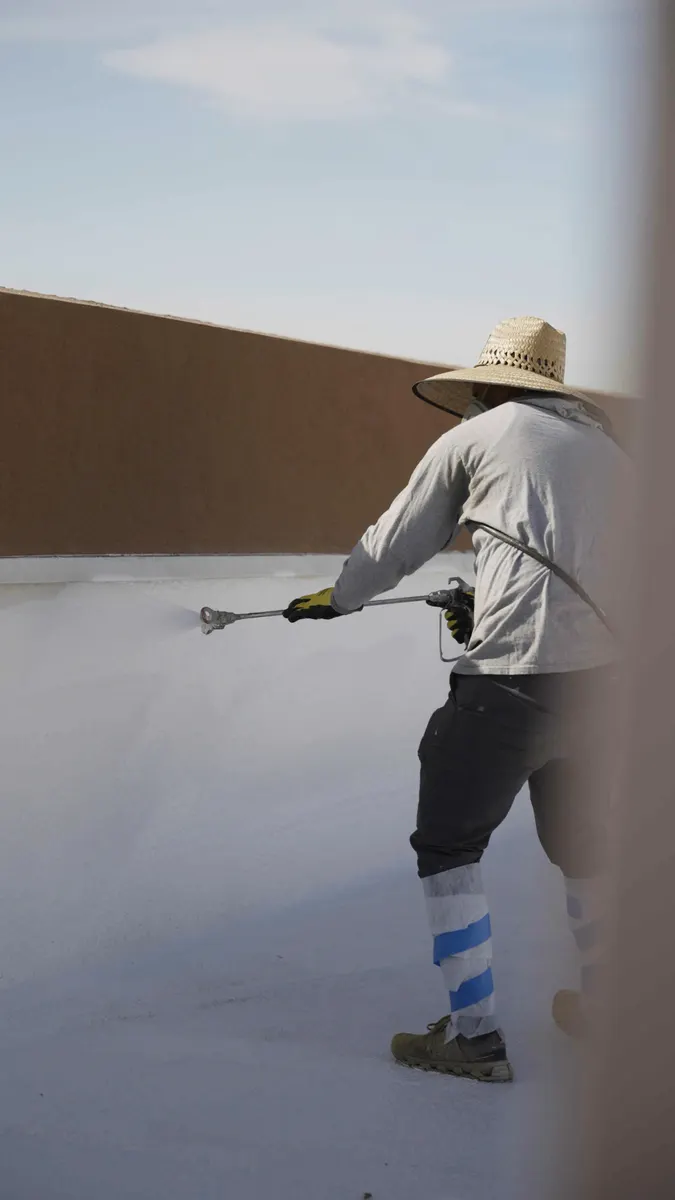
- Recoat: the roof is dry and sound, and it needs new UV protection. Silicone and acrylic coatings both work on foam and many other roofs.
- Replace: the roof is wet in many places, the deck is damaged, or there are already too many layers to cover again. The building code doesn't allow a new roof over a water-soaked roof or over two or more existing layers.
Phoenix permits and approvals
Building permits in Phoenix go through the city's Planning and Development Department. The city's exemption for re-roofing with the same material is the rule homeowners usually hear about. For a commercial building, we confirm with the department whether your scope needs a permit before the work is scheduled, and when it does, we handle the application.
Any building on Phoenix's Historic Property Register needs approval from the city's Historic Preservation Office before work that requires a permit. Retail centers and office parks often have a landlord or owners' association with rules about roof color, rooftop equipment and contractor insurance; we provide the product sheets and certificates they ask for.
Commercial Roof Systems We Work On in Phoenix
- Silicone and acrylic roof coatings: Renew a dry, sound foam or membrane roof with a new reflective, waterproof surface instead of tearing it off.
- TPO single-ply membrane: White, heat-welded membrane for flat roofs with a sound deck. Reflective and clean to maintain.
- Spray polyurethane foam (SPF): Seamless foam that adds insulation and can be shaped to fix low spots, protected by a coating.
- Modified bitumen: Layered asphalt-based roofing with reinforced sheets. We repair existing mod bit roofs and install new ones.
- EPDM: Synthetic rubber membrane with bonded seams. We repair and replace EPDM roofs.
- Repairs, inspections and maintenance: Leak repairs, condition inspections with photos, and scheduled maintenance to keep drains clear and coatings intact.
Pricing and warranty
Every building is priced after an estimator inspects the roof. As a guide, a recoat over sound foam typically runs about $2 to $3.75 per square foot, new spray foam about $5 to $8, and TPO about $5.50 to $9 installed. Our workmanship warranty is 10 years, with an optional paid extension to 25 years, and it transfers to a new owner.
Open 24 hours, 7 days
Call (602) 849-7990 any time for a leak or storm damage in Phoenix. We stop the water with a temporary repair first, then give you a written estimate for the permanent fix.
Phoenix Commercial Roofing FAQs
Do you do commercial roofing everywhere in Phoenix?
Yes. Our office is at 5110 E Warner Rd #210 in Ahwatukee, which is inside the City of Phoenix, and we work on commercial and multifamily roofs across the city, from south Phoenix and Laveen to Desert Ridge. We answer the phone 24 hours a day, 7 days a week at (602) 849-7990.
Should I recoat or replace my flat roof in Phoenix?
It depends on whether the roof is dry underneath. If the existing foam or membrane is dry and sound, a silicone or acrylic coating can renew it for much less than a tear-off. If core cuts show wet foam or insulation in many areas, or the roof already has two or more layers, a coating would seal the water in, and replacement is the right call. We inspect first and price both options when both make sense.
Do I need a permit for a commercial reroof in Phoenix?
Sometimes. Phoenix's Planning and Development Department issues building permits, and whether your project needs one depends on the scope, such as changing roof systems or replacing deck or framing. We confirm the requirement with the city for your building before work is scheduled and handle the permit when one is needed.
What roof works best on a Phoenix warehouse?
Most Phoenix warehouses do well with a reflective roof: white TPO membrane, or spray foam with a silicone or acrylic coating. Foam adds insulation and can be shaped to fix low spots that pond water. TPO is a good fit where the deck is sound and the building needs a clean single-ply surface. The right answer depends on the existing roof, the drainage and how long you plan to own the building.
Can you work on our roof while the business stays open?
Yes. Most commercial roofs are worked on while tenants and customers are inside. Before we start, we agree on work hours, where materials and equipment go, how odors from coatings and adhesives will be handled near air intakes, and how each day's work area is sealed before the crew leaves, which matters most during monsoon season.
More for Phoenix property owners
- Commercial roofing services
- Roofing in Phoenix: our city guide
- Foam (SPF) roofing
- Roof maintenance
- Commercial roof cost guide
- 24/7 emergency roof repair
- Get a free estimate
Commercial roofing in nearby cities
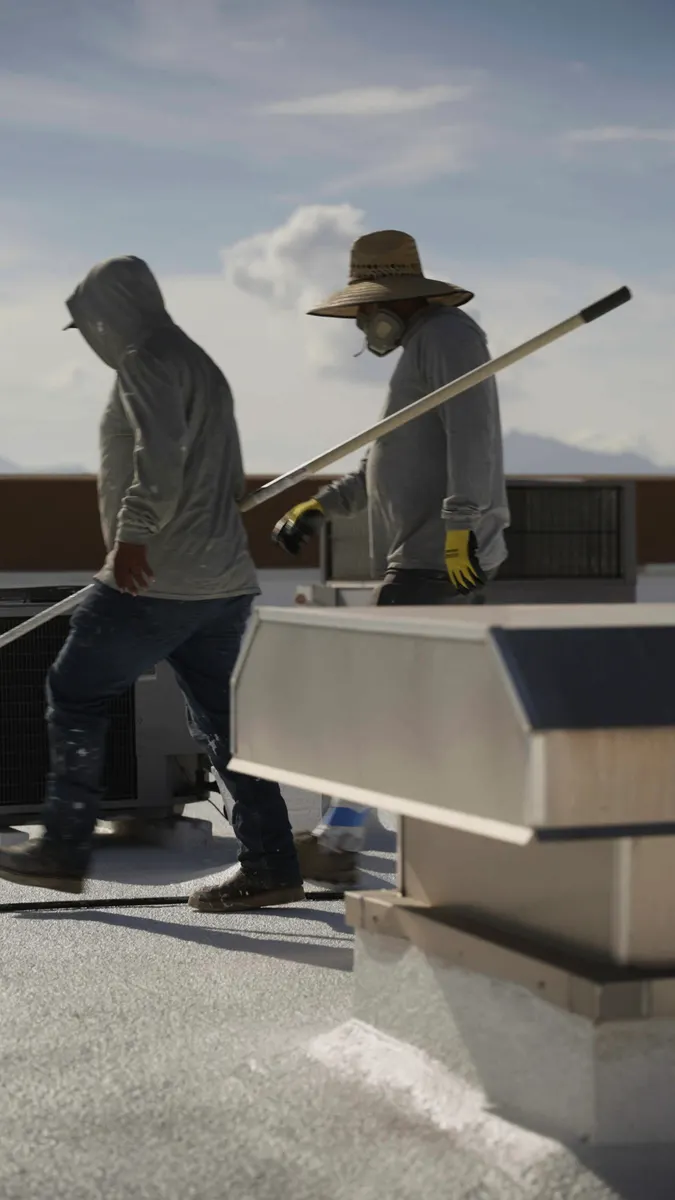
Our Commercial Crews at Work