Tile Roof Underlayment Replacement in Phoenix & Scottsdale
Preserve your reusable concrete or clay tile while replacing the aged waterproof layer beneath it. Simply Roofing carefully stacks and resets tile, repairs roof decking, renews flashing, and installs premium high-temperature underlayment.
Arizona Tile Re-Felt and Stack-and-Reset Service
Tile can last 50 years or longer, while older felt commonly reaches the end of its service life in 15-25 years of Arizona heat. Interior stains, recurring leaks beneath intact tile, brittle felt and dark attic-deck staining are common warning signs.
Tile Roof Leaking? Repair, Re-Lay or Re-Roof
A tile roof leaking in one spot after a storm is often a repair: a cracked tile, a split pipe jack or a failed valley flashing. If the underlayment around it is still flexible, fixing that spot holds. Our tile roof repair page covers those repairs.
When the felt is brittle across the roof, every repair becomes a patch, and the leaks move to new spots. The lasting fix is a re-lay (also called a lift and relay or re-felt): the tile comes off and is stacked, the old underlayment is replaced, and the same tile goes back on. A full re-roof with new tile is the third option, for when the tile itself is worn out.
Tile Roof Replacement vs Underlayment Replacement
Both jobs end with new underlayment and new flashing. The difference is the tile. Underlayment replacement keeps your existing concrete or clay tile and replaces only broken pieces, so it usually costs less and keeps the look your HOA already approved.
A full tile roof replacement makes sense when many tiles are cracked, brittle or worn porous, when the profile is discontinued and there aren't enough spares, or when you want a different look. An estimator lifts tile in several places and checks the tile itself before recommending either one.
The Best Underlayment for a Tile Roof in Arizona
There isn't one product that is best on every roof, but in our heat the choice matters more than almost anywhere. Traditional felt is the lowest-cost option and the one that dries out fastest. Synthetic underlayment holds up to heat better and tears less during installation. Self-adhered membranes rated for high temperatures seal around the nails that pass through them, which matters under tile.
Many roofs get a hybrid: self-adhered membrane in the valleys, at the eaves and around walls and penetrations, with synthetic on the open field. On slopes between 2.5 and 4 inches of rise per foot, code requires two layers under tile. The guide further down this page compares the options in detail.
Cost to Replace Underlayment on a Tile Roof
The price depends on roof size and shape, pitch and access, the underlayment system you choose, how much flashing and deck repair the roof needs, and how much replacement tile is required. You get a written price after an estimator has been on the roof. For typical Arizona ranges, see the tile roof cost guide or the roof cost calculator.
What the Work Includes
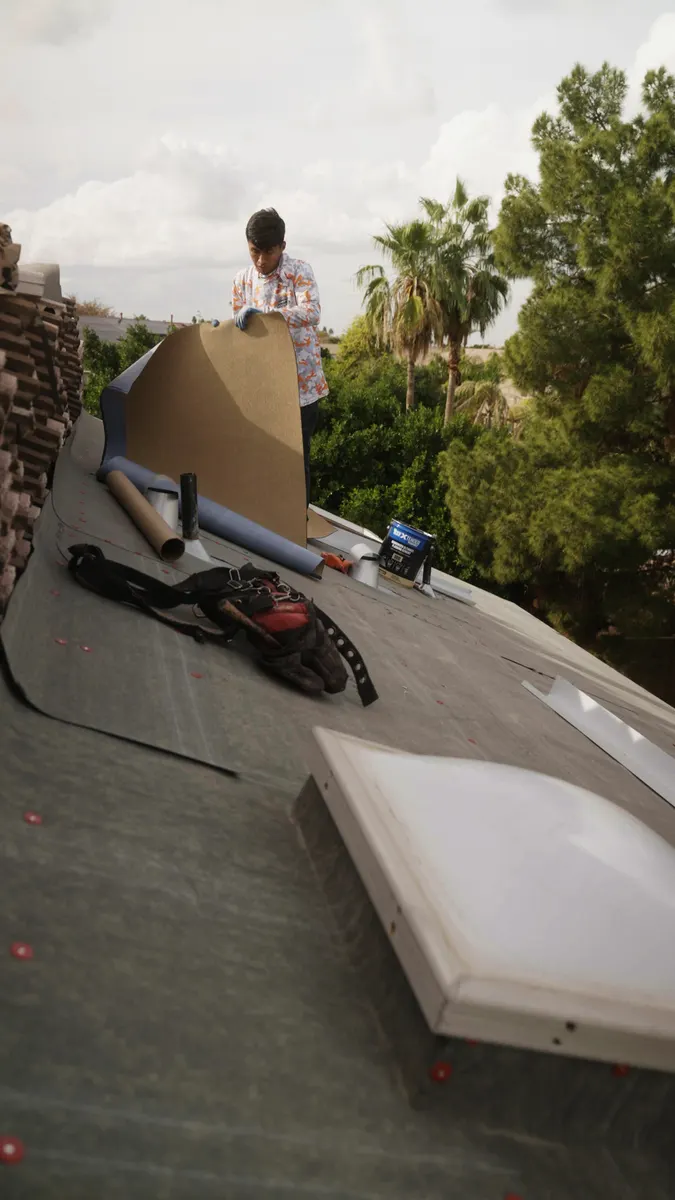
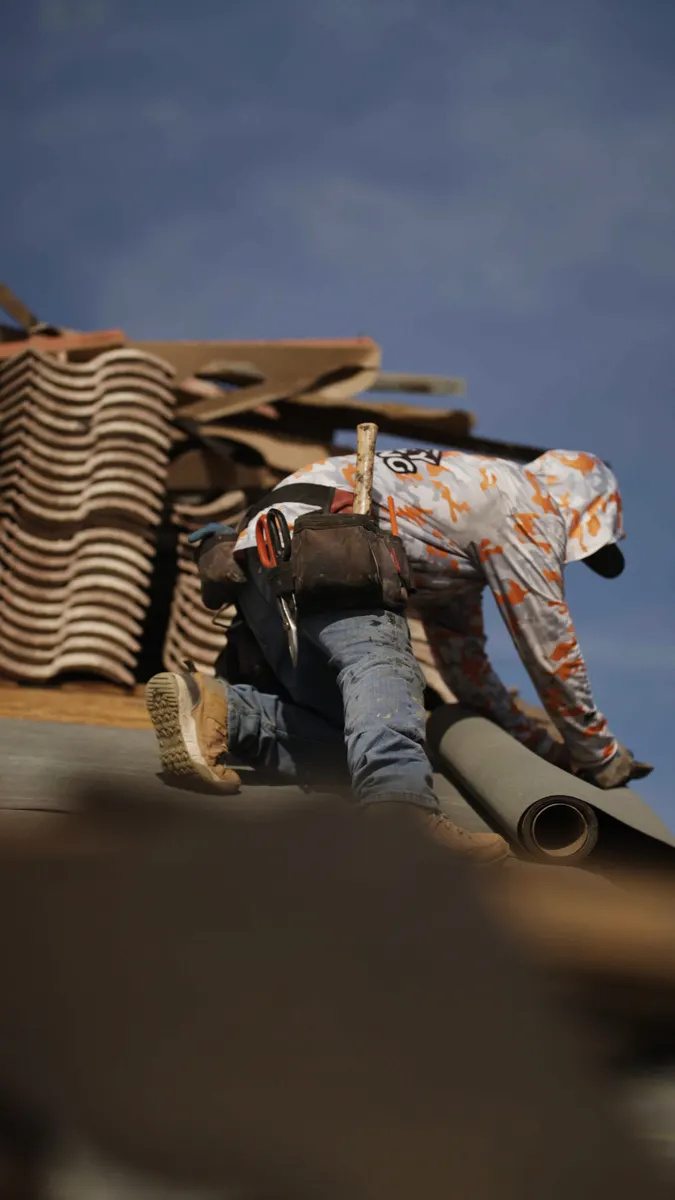
We remove and organize reusable tile, strip old felt, inspect decking, renew flashings, install the selected synthetic or self-adhered system, and reset tile with compatible replacements for broken pieces.
Read our detailed Arizona roof underlayment guide, see tile roof repair for smaller leaks, or call (602) 849-7990 for a free inspection and estimate.
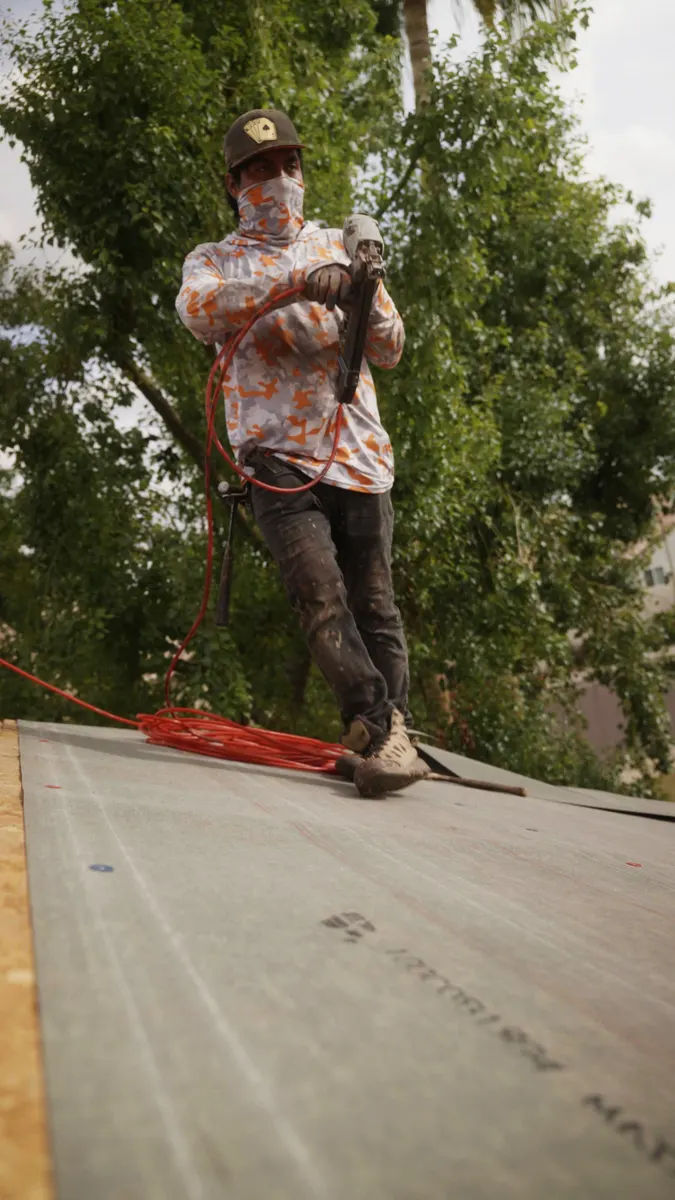
Stack-and-Reset Work in Progress
Tile Underlayment Replacement in Arizona: What Wears Out, What It Costs, and How the Job Is Done
A tile roof is two roofs in one. The tile on top handles sun, wind and most of the rain. The underlayment beneath it is the layer that actually keeps water out of the house. In the Valley, the tile usually outlives the underlayment by decades, so most tile homes reach a point where the tile is fine and the layer under it is not.
This guide goes past the basics above. It covers how to tell which layer is failing, how the underlayment choices compare, what else gets replaced while the tile is off, how much of your tile can go back on, what the job costs, and when re-felting is the wrong choice.
What is actually under your tile
Concrete and clay tile are not watertight. Water runs off the top, but some always gets underneath through the gaps between pieces, at the laps and wherever wind pushes rain sideways. The roof is built to expect this. That water lands on the underlayment and runs down to the eave.
Under the tile you will usually find these parts, and any of them can be the reason a roof leaks:
- Underlayment: felt on most older Valley homes, synthetic or self-adhered sheets on newer work
- Flashing: metal at valleys, walls, chimneys, skylights and the pans around vents
- Pipe jacks and roof vents that pass through the underlayment
- Battens on some roofs: wood strips the tile hooks onto
- Eave closures or bird stops that keep birds and debris out of the first row
- The roof deck: plywood or boards nailed to the rafters
Why the underlayment goes first in the Valley
Tile shades the underlayment from direct sun, but it also traps heat. On a summer afternoon the space under the tile gets very hot, then cools at night. Felt loses its oils in that cycle. It turns stiff, then brittle, then cracks along the tile edges and at every nail.
Most of the time you can't see any of this from the ground. The tile looks the same at year 25 as it did at year 10. The first sign is often a monsoon storm, which runs from June 15 to September 30. Wind-driven rain gets more water under the tile than an ordinary shower, and a cracked underlayment lets it through.
A few things speed up the wear. Valleys collect leaves, dust and broken tile, and that debris can dam water against the underlayment. People walking on the tile to service an AC unit, a satellite dish or solar panels crack pieces and open new gaps. Poor attic ventilation keeps the deck and underlayment hotter than they need to be.
How to tell if it's the underlayment or something smaller
Not every tile roof leak means the whole underlayment is done. A single cracked pipe jack or a slipped tile over a valley can cause a stain on its own. The way to know is to lift tile in several places, not just at the leak.
When an estimator checks a tile roof, these are the things that point to the whole layer reaching the end of its life:
- Felt that cracks or crumbles when it is bent, in more than one area of the roof
- Felt worn through or missing at the eaves, where water runs heaviest
- Dark water staining on the deck from the attic side, away from the obvious leak
- Leaks that move to new spots after each repair
- The original underlayment on a roof that is 15 to 25 years old or older
Underlayment choices, compared
Felt: the traditional choice and the one under most original Valley tile roofs. It is the lowest-cost option, and it is also the one that dries out fastest in our heat.
Synthetic underlayment: woven or spun plastic sheets that are nailed down like felt. They are lighter, tear less easily during installation and hold up to heat better than felt. They rely on laps and fasteners to keep water out.
Self-adhered underlayment: a rubberized asphalt membrane with a sticky back that bonds to the deck. It seals around the nails that pass through it, which matters on a tile roof where every tile fastener goes through the underlayment. Manufacturers make versions for tile roofs rated for high temperatures. One widely used product, for example, is rated up to 265°F. It costs more than synthetic.
Hybrid layouts: self-adhered membrane in the valleys, at the eaves and around walls and penetrations, with synthetic on the open field of the roof. This puts the strongest protection where water is concentrated without paying for it on every square foot.
Roof pitch also matters. Building code allows tile down to a slope of 2.5 inches of rise per foot, but on slopes between 2.5 and 4 inches per foot it requires two layers of underlayment. Many Valley homes have low-slope sections like this over patios and additions, and the estimate should say how they are handled.
What else gets replaced while the tile is off
Once the tile is stacked and the old underlayment is gone, the whole deck is visible for the first time since the house was built. This is the only practical time to fix what sits under the tile, so we look at all of it.
Code says reused tile roofs can't keep old flashing, vents or edge metal that is rusted, damaged or worn out. In practice, valley metal, wall flashing and vent pans on a roof this age usually need replacing. Pipe jacks are replaced, and roof and tile vents are checked.
Soft, delaminated or rotted deck boards are cut out and replaced. Battens that are split or rotted are replaced too, and the estimate notes how they are handled. Deck repairs are the main reason a final price can move, because no one can see the deck until the tile and underlayment are off. Your estimate explains how any deck replacement is priced before the work starts.
How much of your tile goes back on
Building code allows concrete and clay tile to be reinstalled, as long as cracked or broken pieces are not put back. Some breakage is normal when tile is lifted, stacked and relaid, and older tile breaks more easily than newer tile. Pieces that were already cracked are found and replaced at the same time.
Replacement tile is matched by profile and color as closely as possible. Many tile lines from the 1980s and 1990s are no longer made, and even the same product can look different after decades of sun. When a close match isn't available, we move original tile to the slopes you see from the street and put the replacements on back or hidden slopes.
Re-felting stops making sense when the tile itself is the problem. Signs include concrete tile with a heavily worn or porous surface, clay tile that breaks easily when handled, widespread cracking, or a discontinued profile with too few spares. In those cases a full tile replacement may be the better use of the money.
What tile underlayment replacement costs
Most tile underlayment replacements we do in the Phoenix area cost about $10,000 to $22,000. For comparison, repairs usually run $300 to $5,000, and a full tile replacement with new tile is about $15,000 to $35,000.
Where a job lands in that range depends on:
- Roof size and how many hips, valleys and separate sections it has
- Pitch, height and how easy it is to reach and stack tile safely
- Which underlayment system you choose, and whether low-slope areas need two layers
- How much flashing, vent and pipe jack work the roof needs
- How much deck or batten replacement turns up once the roof is open
- How many replacement tiles are needed and whether a match is available
- Solar panels or rooftop equipment that must be removed and reset
Repair, re-felt or replace?
A spot repair makes sense when one area has a clear cause, such as a cracked pipe jack or a damaged valley, and the underlayment elsewhere still bends without cracking. It buys time, but on old felt it rarely buys a lot.
A full underlayment replacement makes sense when the felt is brittle in several places and the tile is still sound. You keep the look of the house and get new underlayment, flashing and deck repairs underneath.
A full tile replacement makes sense when the tile is worn out, too many pieces are broken to match, or you want a different color or profile. Changing to a different material is a bigger decision with its own permit and HOA questions.
Solar panels and rooftop equipment
Panels sit on mounts that pass through the tile and the underlayment, so the underlayment beneath them can't be replaced with the panels in place. We offer solar detach and reset: the panels come off before the tile does and go back on once the new underlayment, flashing and tile are in. The mounts are flashed into the new underlayment.
If your panels are leased or under a warranty from the installer, check whether they need notice before anyone removes them. The same planning applies to satellite dishes and any equipment stands on the roof.
What to expect during the job
Before work starts, you get a written estimate that lists the underlayment system, the flashing work and how deck repairs are priced. We photograph the roof before, during and after the job, including the deck once it is exposed, so you can see what was found and what was fixed.
During tear-off, dust and bits of old felt can fall through gaps into the attic, so it helps to cover anything stored up there. Expect noise while tile is lifted and relaid, and keep cars and patio furniture clear of the eaves.
Underlayment work can be done any time of year. During monsoon season, scheduling depends more on the forecast, because the deck is exposed between tear-off and the new underlayment going down.
Permits, HOAs and insurance
Because the same tile goes back on, many Valley cities treat this job as a same-material reroof, which they usually exempt from a permit. That isn't true everywhere. Scottsdale, Tempe and Goodyear require a permit once roof sheathing or deck boards are replaced, which is common on older homes. Glendale and some smaller towns don't publish a clear rule, so we ask the city before starting. Each of our city guides spells out the local rule.
Most HOAs don't need to approve a job that puts the same tile back, but some communities require a form even for work that keeps the same look. If replacement tile has to be a different product, your HOA may want to see it. We can provide product details and samples.
Worn-out underlayment is usually a maintenance issue, not storm damage. If a storm broke tile or tore flashing, we document the damage and can meet your adjuster. Your insurance company decides what is covered and how much it pays.
Licensing, warranty and financing
Simply Roofing holds Arizona ROC license #358508, which you can look up on the Registrar of Contractors website. Hiring a licensed contractor also matters if something ever goes wrong. The state's Residential Contractors' Recovery Fund only covers work by licensed contractors on homes the owner lives in.
Our tile underlayment replacements come with a 10-year workmanship warranty (25-year available). Ask your estimator what it covers on your job. Financing is available if you would rather spread the cost out, and your estimator can walk you through the options.
Where We Work
- Phoenix
- Mesa
- Chandler
- Scottsdale
- Gilbert
- Tempe
- Glendale
- Peoria
- Surprise
- Goodyear
- Avondale
- Buckeye
- Queen Creek
- Maricopa
- Fountain Hills
- Paradise Valley
- Cave Creek
- Carefree
- Litchfield Park
- Tolleson
- El Mirage
- Wickenburg
- Youngtown
- Guadalupe
- Sun City
- Sun City West
- Sun Lakes
- Gold Canyon
- Apache Junction
- Anthem
- New River
- Rio Verde
- Ahwatukee
- Fort McDowell
Guides and cost breakdowns
- Tile Roof Cost in Arizona (2026 Pricing Guide) (Cost guide)
- Cracked, Slipped and Broken Roof Tiles in Arizona: Causes, Repair and Cost (Guide)
- HOA Approval for a Roof Replacement in Arizona: What to Submit and How Long It Takes (Guide)
- Roof Leak Repair Cost in Phoenix: What Drives the Price and When to Stop Patching (Guide)
- How Long Does a Roof Last in Arizona? Real Lifespans by Material (Guide)
- Selling or Buying an Arizona Home: How the Roof Affects Inspections, Loans and the Deal (Guide)
- Skylight Leaks in Arizona: Causes, Fixes and When to Replace the Skylight (Guide)
- Solar Panels and Your Roof in Arizona: Re-Roofing, Repairs and Detach & Reset (Guide)