Tile Roof Repair in Phoenix
Cracked or slipped tile, loose ridge caps after a monsoon storm, or a leak under a roof that looks fine from the street. We find where the water gets in, fix it, and tell you plainly whether a repair will hold.
Licensed ROC #358508. Open 24 hours, 7 days. Call (602) 849-7990 for a free estimate.
Most tile roof repairs in the Valley start one of two ways: a few broken pieces you can see after a storm, or a stain on a ceiling under a roof that looks perfectly fine. Fixing roof tiles is often quick work. The harder part is knowing whether the tile is the problem at all, because on a Phoenix tile roof it usually isn't the layer that keeps water out.
How a tile roof keeps water out
Concrete and clay tile shade the roof from the sun and shed most of the rain, but tile is not watertight. Water gets under it at the laps and side joints, and monsoon wind pushes rain sideways under the edges. The roof is built to expect that. Beneath the tile is the underlayment, and that is the layer that actually waterproofs the house.
In the Valley the tile usually outlasts the underlayment by decades. Tile can last 50 years or more, while the felt underlayment on most older homes wears out in about 15 to 25 years in our heat. It dries out, turns brittle and cracks along the tile edges and at every nail. That is why so many tile roof leaks show up on roofs where no tile is broken.
So a good tile repair looks at both layers: the tile you can see and the underlayment and flashing you can't. Read more about that layer on our tile underlayment replacement page.
Tile roof repairs we do
Typical tile roof repairs on Phoenix-area homes include:
- Cracked, broken and slipped tile: we replace broken pieces with the closest matching profile and color and reset tile that has slid out of place.
- Ridge and hip caps: we reset loose or missing caps and renew the mortar or ridge system that holds them, since wind gets under loose caps first.
- Valleys: we clear debris, replace rusted or damaged valley metal, and repair the underlayment beneath it, because valleys carry more water than any other part of the roof.
- Pipe, vent and skylight flashings: cracked pipe jacks and worn vent flashings are among the most common sources of a tile roof leak.
- Wall and patio flashings: the joint where a roof meets a wall, a chimney or a patio cover is a frequent leak point.
- Bird stop and eave closures: missing bird stop lets birds and debris into the first row of tile, where nests and trash can hold water against the underlayment.
- Leaks around solar mounts and rooftop equipment. When panels have to come off to reach the leak, we detach and reset them as part of the roof work.
On older roofs where the original tile is no longer made, we can move original tile to the slopes you see from the street and put the closest replacements on back or hidden slopes.
Tile roof leak repair: finding where the water gets in
Water that gets past a tile roof rarely drips straight down. It runs along the underlayment or a rafter and shows up somewhere else, often several feet downhill from where it entered. Patching the spot above the stain is how a leak gets "fixed" three times.
We start above and around the stain and lift tile until we find the break: a crack in the underlayment, a failed flashing, a split pipe jack or a nail hole that never sealed. We repair that area with new underlayment and flashing, reset the tile, and replace any cracked pieces we find along the way. You get photos of what we found and what we fixed.
While the tile is up, we also look at how brittle the underlayment is beyond the leak. That one check tells you more about the roof's future than anything you can see from the ground.
When a tile repair is only a patch
A repair makes sense when the problem is in one place and the underlayment around it is still flexible. It stops making sense when the underlayment itself is worn out. If the felt is 15 to 25 years old or more, cracks when it's bent and is brittle in more than one area, new leaks will keep showing up in new places no matter how carefully each one is fixed.
Signs that you're past the point of patching:
- Leaks that move to a new spot after each repair
- Brittle or cracked felt wherever tile is lifted, not just at the leak
- Felt worn through at the eaves, where water runs heaviest
- Dark water staining on the roof deck seen from the attic, away from the known leak
At that point the real fix is an underlayment replacement, often called a re-lay or lift and relay: we lift and stack your tile, remove the old underlayment, repair the deck, install new underlayment and flashing, and reinstall your existing tile. You keep the tile you already paid for. See tile underlayment replacement for how that job is done, or our tile roofing page for all three options, including a new tile roof.
We'll tell you which one you're looking at. If a repair will hold, we recommend the repair.
What tile roof repair costs
The cost of a tile roof repair depends on how much tile has to come up, the roof pitch and height, whether the deck under the leak is damaged, how much flashing needs replacing, and whether matching tile is still made. A few replaced tiles and a reset ridge cap is a small job. Rebuilding a valley or a section of underlayment is a bigger one.
An estimator looks at the roof and gives you a written price before any work starts. For typical ranges for repairs, underlayment replacement and new tile, see our Arizona tile roof cost guide or try the roof cost calculator.
Storm damage and active leaks
Monsoon season runs June 15 to September 30, and one storm can lift ridge caps and break tile across a whole neighborhood. If water is coming in now, call (602) 849-7990. We're open 24 hours, 7 days, and our emergency roof repair crews stop the water first, then come back for the permanent repair.
If you plan to file an insurance claim, we photograph and document the damage and can meet your adjuster at the house. Whether a claim is approved, and for how much, is up to your insurance company.
Keeping the next tile from breaking
Many broken tiles come from people walking on the roof for AC service, satellite dishes, holiday lights or solar work. Ask anyone who goes up to tell you about anything they break.
A yearly check before monsoon season catches slipped tile, loose caps and cracked flashing while they're still small. A professional roof inspection includes photos and a note on how much life the underlayment has left, and our roof maintenance plans put that check on a schedule.
Tile Roof Repair FAQs
Can you fix just a few broken roof tiles?
Yes. Replacing a few cracked or slipped tiles is a common repair. We match the profile and color as closely as we can, reset any slipped pieces, and check the underlayment and flashing underneath while the area is open.
Why is my tile roof leaking when none of the tiles are broken?
Because the tile isn't the waterproof layer. Water always gets under tile, and the underlayment beneath it is what keeps it out of the house. When that underlayment is old and brittle, or a flashing or pipe jack has failed, a roof with no broken tile can still leak.
How do I know if I need a tile repair or new underlayment?
If the leak is in one spot and the underlayment around it is still flexible, a repair should hold. If the underlayment is 15 to 25 years old or more, cracks when bent and is brittle in several places, or leaks keep moving to new spots, replacing the underlayment and reinstalling your tile is the lasting fix. An estimator can tell by lifting tile in a few places.
How much does tile roof repair cost?
It depends on how much tile comes up, the pitch and height of the roof, deck damage, flashing work and whether matching tile is available. We give you a written price after looking at the roof. Our Arizona tile roof cost guide lists typical ranges.
Can you match my roof tile?
Usually closely. Many tile profiles from the 1980s and 1990s are no longer made, and even the same product fades over decades of sun. When a close match isn't available, we can move original tile to the slopes you see from the street and put the replacements where they won't show.
Is it safe to walk on a tile roof to look at the damage?
We don't recommend it. Tile cracks easily underfoot, and a tile roof is slippery and steep. Tell us what you see from the ground or inside the house, and we'll inspect it and send you photos.
Related Services and Guides
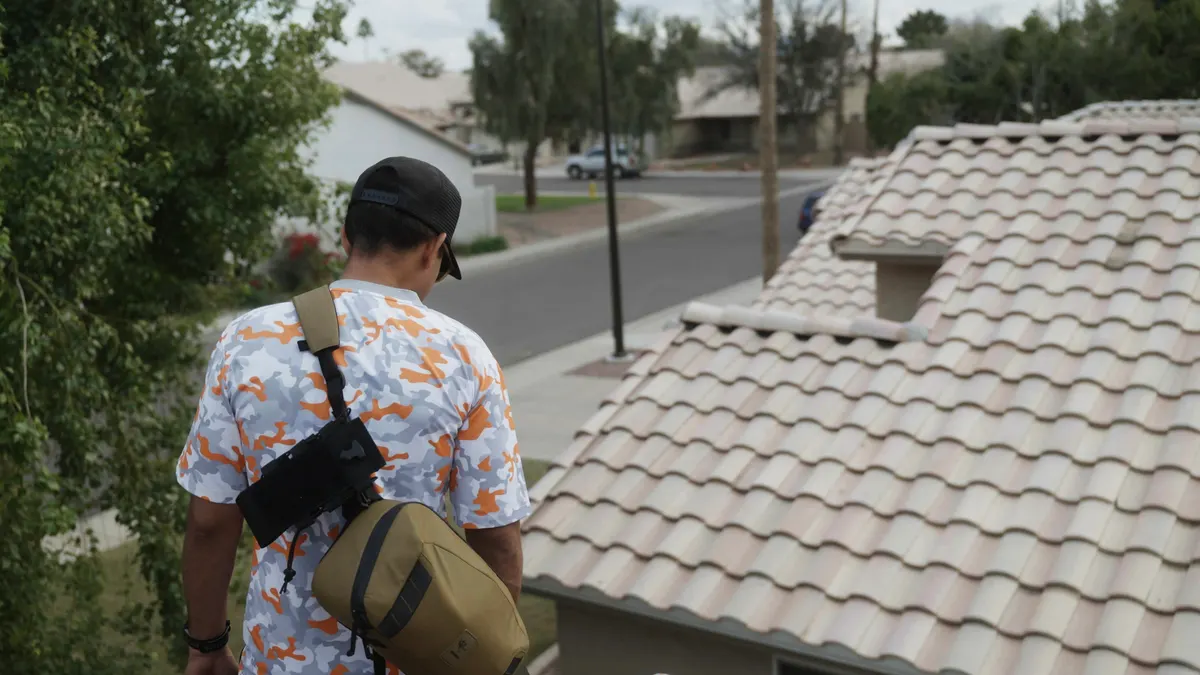
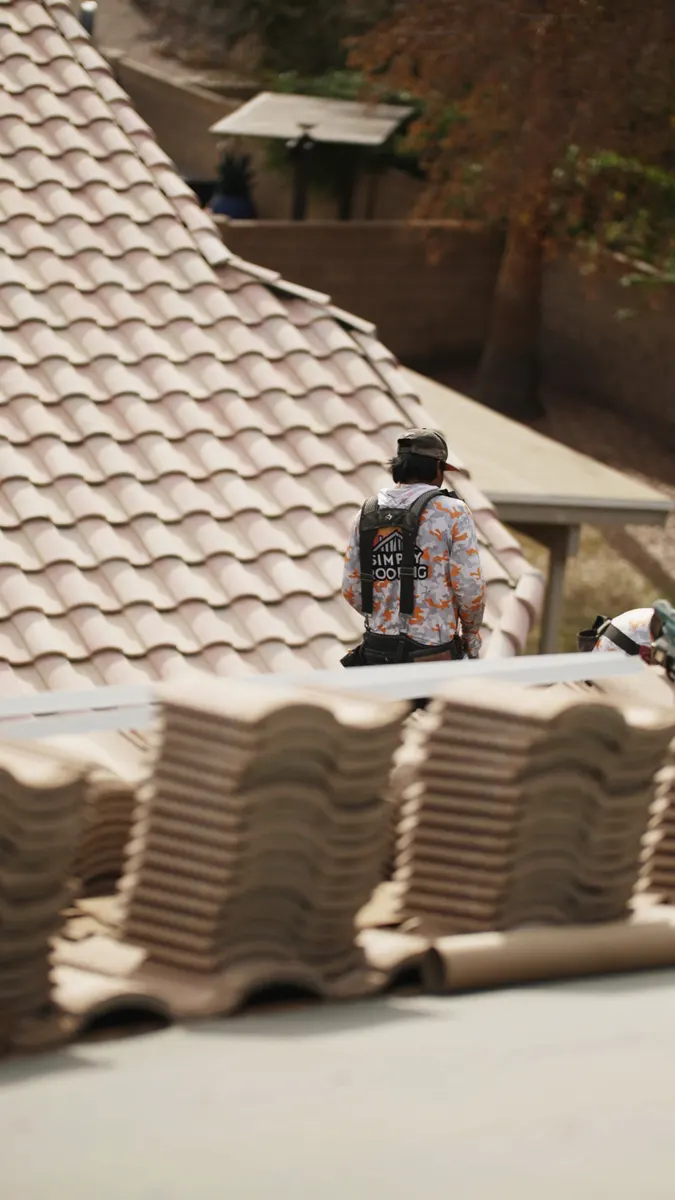
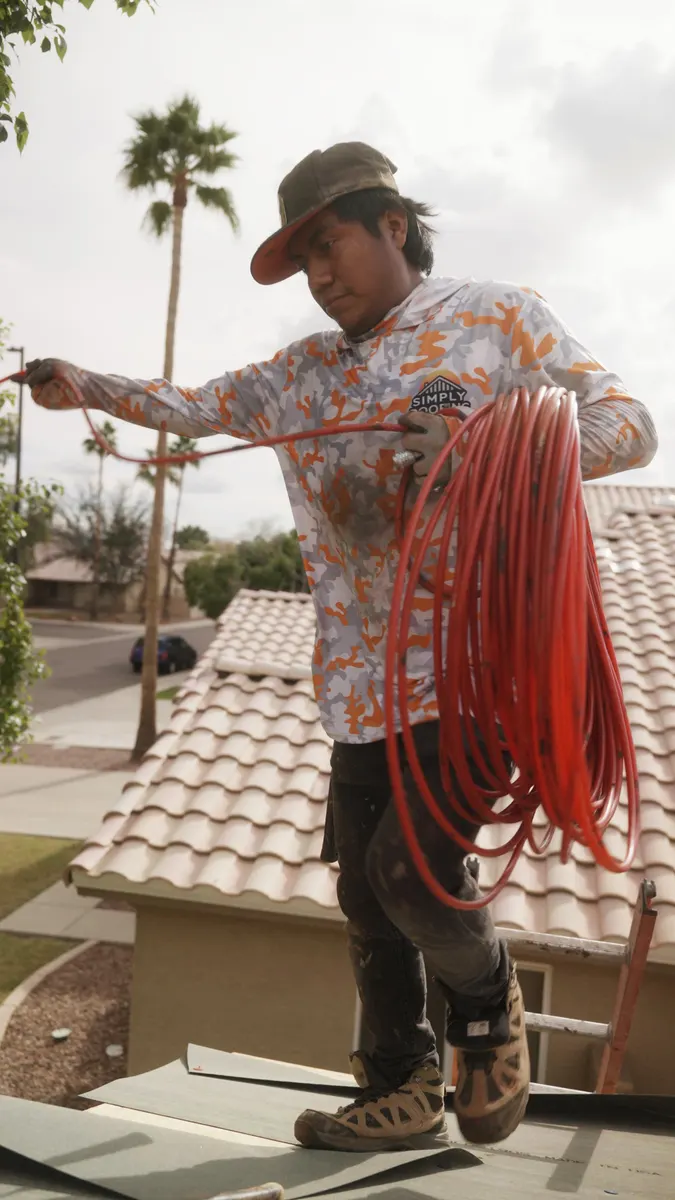
Our Crews on Tile Roofs
Guides and cost breakdowns
- Tile Roof Cost in Arizona (2026 Pricing Guide) (Cost guide)