Flat Roof Repair in Phoenix
Leaks at a scupper or parapet, water that sits for days after a storm, a soft spot by the AC unit. We repair flat roofs on Valley homes and commercial buildings, and we tell you when a repair, a recoat or a new roof is the better spend.
Licensed ROC #358508. Open 24 hours, 7 days. Call (602) 849-7990 for a free estimate.
Flat roofs are common in the Valley. Pueblo Revival and territorial-style homes have flat roofs behind parapet walls. Many ranch homes have a flat section over a carport, patio, Arizona room or addition. And most commercial buildings, from strip centers to warehouses, are flat behind a parapet.
No flat roof is truly flat. Each one is built with a slight slope so water runs to a scupper or drain, and most flat roof problems come back to that water and the places it has to pass. This page covers how we repair the common flat roof types, where they leak, and how to decide between repair, recoat and replacement.
Flat roof types we repair
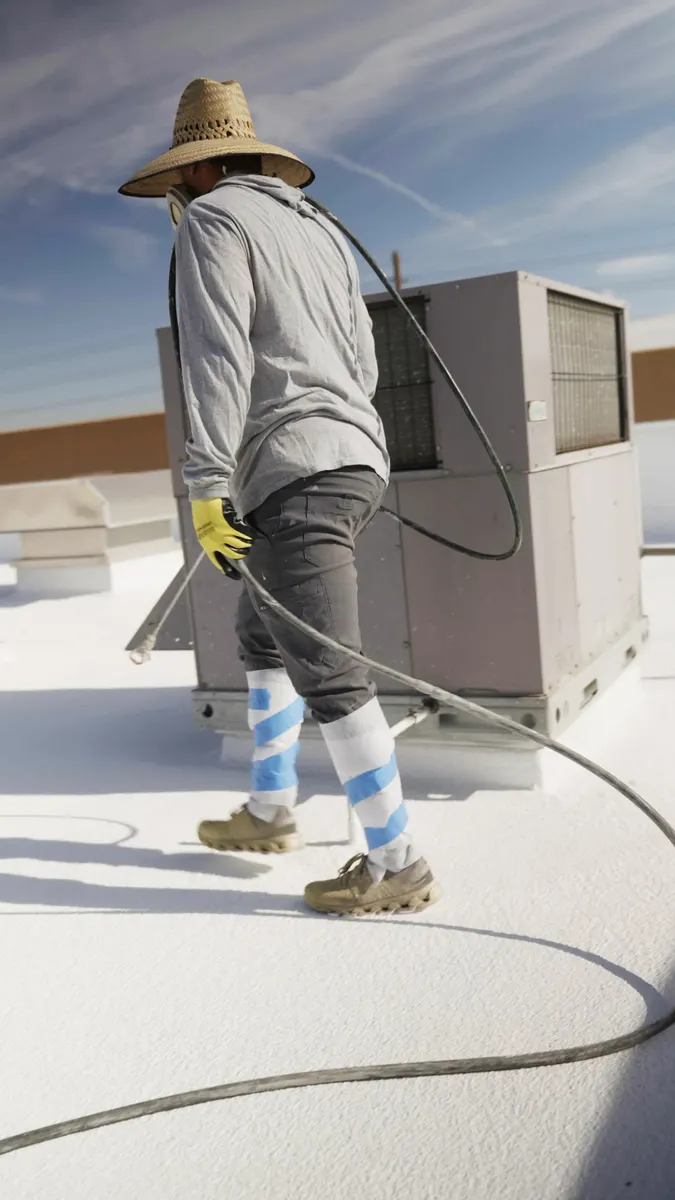
Spray foam (SPF): the most common flat roof on Valley homes. Foam is seamless and insulates well, but it depends on its coating for UV protection. We cut out foam that is wet or crushed, fill the area with new foam shaped to drain, and coat it. If the coating is worn across the roof, a recoat often goes on in the same visit. See foam roofing.
TPO: a white single-ply membrane with heat-welded seams, common on commercial buildings and some newer homes. Repairs usually mean re-welding or patching open seams, punctures and flashings at curbs and walls.
Modified bitumen: rolled asphalt-based sheets, often with a granular or coated surface. Common repairs are blisters, split laps and cracked flashings at parapets.
Built-up roofs (BUR): layers of felt and asphalt, often with gravel, found on many older homes and commercial buildings. They are repaired at cracks, blisters and flashings, and when they wear out we usually replace them with foam or a modern membrane.
Where flat roofs leak
Most flat roof leaks start at the same handful of spots:
- Scuppers and drains: a blocked or rusted scupper backs water up over flashing that was never meant to sit underwater.
- Parapet walls: cracked parapet caps and stucco let water into the wall, and it shows up inside even when the roof surface is fine.
- AC curbs and equipment stands: the joint where a curb or old cooler stand meets the roof, plus foot traffic from service techs.
- Transitions: the seam where a flat section ties into a pitched roof or the house wall.
- Penetrations: vent pipes, skylights and conduit that pass through the roof.
- Worn coating or open seams across the field of the roof.
Like any leak, the water usually shows up inside some distance from where it entered. We find the entry point and fix that instead of sealing over the spot above the stain.
Ponding water and drainage
Roofing standards treat water still sitting 48 hours after rain as ponding. On a flat roof it usually means a low spot, a sagging deck or a blocked scupper. Ponding wears coatings and membranes faster, adds weight, and gives any small crack time to leak.
Monsoon season, June 15 to September 30, is when most hidden drainage problems show up. Dust storms blow dirt and debris into scuppers, then heavy rain arrives before anyone has cleared them. Fixes range from clearing and re-flashing scuppers, to building up low spots with foam, to adding a cricket behind an AC unit so water runs around it. Our guide to flat roof drainage and scuppers in Arizona goes into more detail.
Repair, recoat or replace?
The question that decides most flat roof jobs is whether the roof is dry underneath. That's why we probe soft spots and take small core cuts where needed, then patch them before we leave.
- Repair when the damage is in a few places and the rest of the roof is sound.
- Recoat when the roof is dry and drains reasonably well but the coating is worn. See roof coatings for how the coating types compare.
- Repair first, then recoat, when there are a few wet areas, blisters or low spots on an otherwise sound roof.
- Replace when wet areas are widespread, the deck is damaged, ponding covers large areas, or there are too many old layers for a new coating to bond.
A flat roof replacement means removing the old layers down to the deck, replacing damaged boards, correcting low spots so water reaches the drains, and installing a new foam or membrane system. If you're weighing systems, read TPO vs spray foam for Phoenix flat roofs. For typical ranges, see the foam roof cost guide.
Flat roofs on Phoenix-area homes
On a house, the flat section is often the part that gets the least attention. It can't be seen from the street, it sits under the full afternoon sun, and the joint where it meets the pitched roof is one of the most common leak points we find. Many older Valley homes also have an evaporative cooler or AC stand sitting on a flat section, and the curb under it is a frequent source of leaks.
When we repair a flat section on a home with a tile or shingle main roof, we check the transition between the two. If the pitched roof has its own problems, we'll point them out, and our tile roof repair page covers what we look for there.
Commercial flat roofs
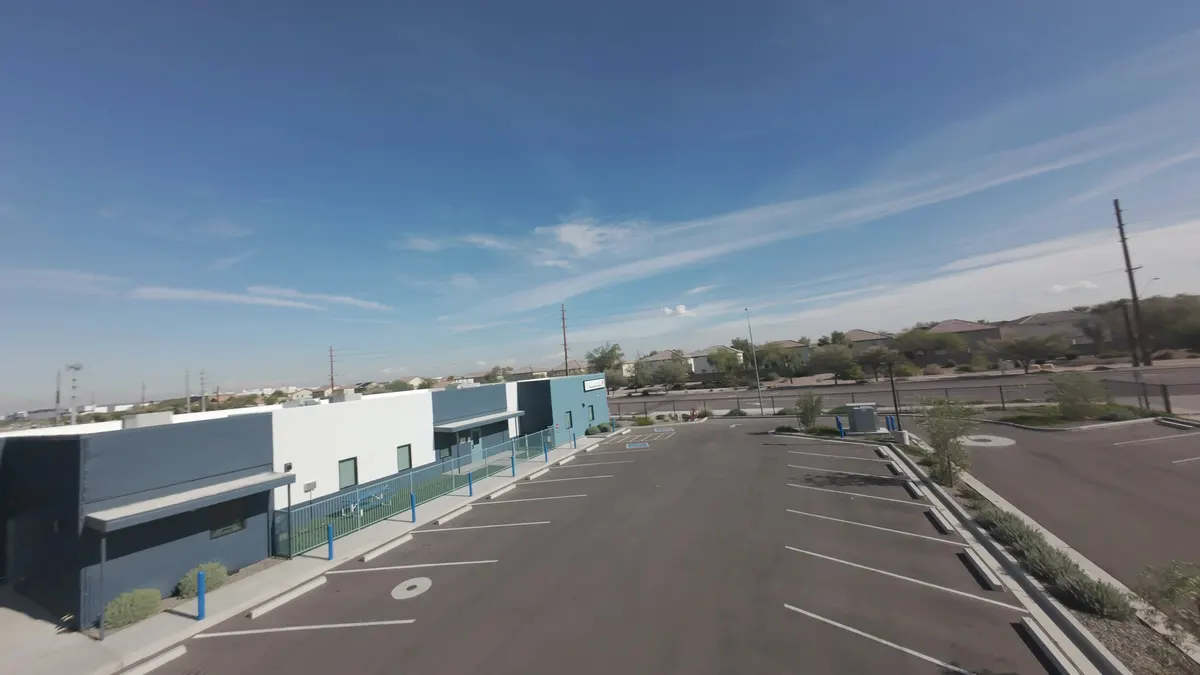
We repair, recoat and replace flat roofs on offices, retail, restaurants, warehouses and apartment buildings across the Valley. Many older commercial roofs have been patched and recoated several times by different contractors, so the first step is finding out what's actually up there.
On a property with several buildings, the roofs rarely age at the same rate. We inspect each one and sort them into what needs work now, what can wait for a recoat, and what is sound, so you can budget instead of reacting to leaks. More on our commercial roofing page.
What happens on a flat roof inspection
An estimator walks the whole roof, not just the leak: scuppers and drains, parapet caps, curbs, penetrations, seams and the condition of the coating. We probe soft areas, note where water has been sitting, and take core cuts where moisture is in question.
You get photos and a written scope that says whether we recommend a repair, a recoat, a repair and recoat, or a replacement, and why. For an active leak, call (602) 849-7990 any time. We're open 24 hours, 7 days, and we stop the water first.
Flat Roof Repair FAQs
Is water standing on my flat roof a problem?
Some water right after a storm is normal. Roofing standards treat water still sitting 48 hours after rain as ponding, and ponding wears coatings and membranes faster and gives small cracks time to leak. It usually points to a blocked scupper, a low spot or a sagging deck.
Should I repair or replace my flat roof?
If the roof is dry underneath and the damage is in a few places, repair it, and recoat if the coating is worn. If wet areas are widespread, the deck is damaged or ponding covers large areas, replacement is the better spend. Core cuts and a walk of the whole roof tell us which one you have.
How long does a flat roof last in Phoenix?
It depends on the system and how well it's kept up. TPO commonly lasts 20 to 30 years and modified bitumen 15 to 20. A spray foam roof can last decades if its coating is renewed before the foam is exposed. Heat, UV and ponding all shorten those numbers.
Can you repair the flat roof over my patio or carport?
Yes. Flat sections over patios, carports and additions are some of the most common repairs we do. We also check the seam where the flat section meets the main roof, since that joint is a frequent leak point.
Do you repair commercial flat roofs?
Yes. We repair, recoat and replace foam, TPO, modified bitumen, built-up and EPDM roofs on commercial and multifamily buildings across the Phoenix area, and we're open 24 hours for active leaks.
Is foam or TPO better for a flat roof in Phoenix?
Both work well here. Foam is seamless, insulates and can be shaped to fix drainage, but it needs its coating renewed. TPO is a reflective membrane with welded seams and less upkeep, but it relies on those seams and on a deck that drains. The roof's shape, drainage and what's on it now usually decide it.
Related Services and Guides
Our Crews on Flat Roofs

Guides and cost breakdowns
- Foam Roof Cost in Arizona (2026 SPF Pricing Guide) (Cost guide)